
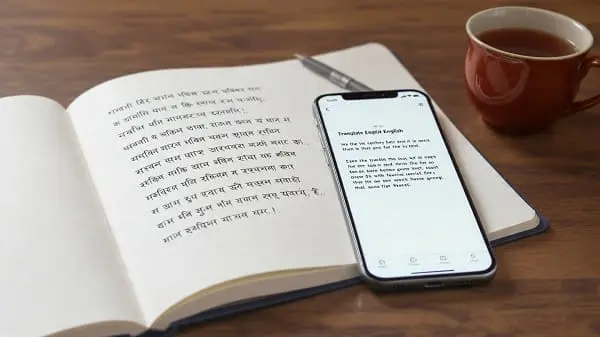
A complete, practical guide to translating Chittagonian into English using smart workarounds, apps, OCR, and human review—packed with workflows, examples, and a phrase toolkit.
When Language Becomes a Barrier
You’re in Chattogram, Bangladesh. A CNG driver greets you with a friendly question that sounds almost like Bangla—until it doesn’t. Familiar words pop out, but the flow is different, the vowels feel new, and you realize you’re not just dealing with an accent. You’re hearing Chittagonian, a major regional language spoken by millions in southeastern Bangladesh and by diaspora communities abroad.
Now imagine you’re a student researching South Asian languages, a professional serving clients from Chattogram, or simply messaging friends who mix Chittagonian phrases into Bangla or English chats. Without a reliable way to move between Chittagonian and English, everyday tasks—from reading a sign to understanding a short voice note—become frustratingly slow. The good news is that, with the right setup, you can translate confidently, even though Chittagonian isn’t directly supported by most mainstream translation engines.
Why Translating Chittagonian into English Matters
- Students and researchers: Chittagonian offers rich data for phonetics, morphology, and language-contact studies. Getting accurate English renditions allows better analysis and publication.
- Travelers: Conversations and signage often shift to Chittagonian in Cox’s Bazar, Rangamati, and Bandarban. Quick comprehension is a safety and comfort multiplier.
- Professionals and NGOs: Many workers in the Gulf and Southeast Asia come from Chittagong Division. Clear, respectful translations reduce mistakes in safety, health, and business communication.
- Everyday users: WhatsApp groups, Facebook pages, and family chats frequently mix Chittagonian with Bangla and English. Translating on the fly keeps relationships smooth.
Translating Chittagonian into English is as much about process as it is about tools. You’ll learn a practical, repeatable workflow that uses a Bangla “pivot,” camera OCR, and human review for accuracy.
What Makes Chittagonian Distinct?
Chittagonian is a recognized regional language of the Eastern Indo‑Aryan group. While it shares roots with Standard Bangla, it differs substantially in sound patterns, vocabulary, some grammar behaviors, and everyday usage. Treating it as “just Bangla with an accent” leads to misunderstandings.
Key distinctions at a glance
- Phonology: Vowels and consonants are realized differently; some syllables reduce or shift, and stress patterns can change the cadence compared to Standard Bangla.
- Lexicon: Many everyday words diverge from Bangla, particularly household items, kinship terms, and local expressions.
- Register: Chittagonian has informal and respectful address forms that don’t always map neatly to Bangla or English.
- Script usage: When written, it’s typically in the Bangla script, but spelling can reflect Chittagonian pronunciation and local conventions.
These differences explain why direct machine translation fails. But they also reveal your biggest advantage: if you can pivot to Standard Bangla spelling and structure first, modern Bangla–English engines can carry you the rest of the way.
Quick-Start: 5-Minute Setup
- Install a mainstream translator on your phone and ensure Bangla ↔ English is available. Confirm Pashto or other settings aren’t selected by mistake.
- Enable a Bangla keyboard on your device. This lets you type or correct text in Bangla script when pivoting from Chittagonian.
- Install a camera/OCR app capable of reading Bangla script so you can capture text from signs, posters, or printed notes and then translate.
- Bookmark an online dictionary for Chittagonian ↔ English with community examples for nuance and idioms.
- Create a notes doc titled “Chittagonian → Bangla → English” and add common phrases you’ll reuse (greetings, directions, prices).
Step-by-Step: Chittagonian → English Workflow
This repeatable process helps you go from a Chittagonian phrase you hear or see to a trustworthy English translation—fast.
Step 1: Capture the text (or phrase)
- Text on signs or messages: Use a camera/OCR app to extract Bangla-script text. If it’s handwritten, try multiple angles and good lighting for better recognition.
- Audio or conversation: Ask politely if the speaker can write it down in Bangla script, or repeat slowly while you transcribe. If that’s not possible, note key words phonetically.
Step 2: Normalize to Standard Bangla
Because the writing often mirrors Chittagonian pronunciation, the first pass can look “off” to machine translators. Replace regionally spelled words with Standard Bangla equivalents when you recognize them. If you’re unsure, use a community dictionary entry to spot the common Bangla form.
Step 3: Translate Bangla → English
Run the normalized Bangla text through your translator. For critical messages (health, safety, instructions), keep sentences short and avoid slang. If the English output feels odd, simplify the Bangla input and try again.
Step 4: Back-translate and sanity-check
- Back-translation: Translate the English result back to Bangla. If the meaning drifts, adjust wording and re-run.
- Human check: When accuracy matters, ask a Bangla/Chittagonian speaker to confirm the final meaning and tone.
Step 5: Save and reuse
Add successful translations to your notes with three lines: Chittagonian (as heard), Bangla (normalized), and English (final). Over time, this becomes your customized phrasebook.
The Bangla-Pivot Method (Your Secret Weapon)
Most mainstream translators don’t support Chittagonian directly. But they do handle Bangla well. That’s your pivot: express the Chittagonian phrase in Standard Bangla, then translate to English. Here’s a simple example.
Chittagonian (as heard): “Tui kotha za?”
Normalize to Bangla: “Tumi kothay jaccho?” (Where are you going?)
Bangla → English: “Where are you going?”
The pivot method also works for prices, directions, and common service interactions. When nuance matters (proverbs, humor, respect), pair the pivot with a community dictionary and human review.
Camera, OCR, and Handwriting Tips
- Lighting: Shoot in bright, even light; avoid glare and shadows. High contrast improves recognition for Bangla script.
- Angles and distance: Square the camera to the page; take multiple shots at different distances if characters look fuzzy.
- Handwriting: If OCR struggles, ask someone to rewrite the phrase carefully or type it using a Bangla keyboard.
- Post-processing: After OCR, correct obvious spelling errors to Standard Bangla before translation.
Test your OCR workflow on a printed menu or poster before you rely on it in the field. A two-minute rehearsal saves headaches later.
Handling Voice Notes and Real Conversations
Many real interactions arrive as voice notes or live speech. Because automatic speech recognition rarely supports Chittagonian directly, use human-guided steps:
- Ask for a text repeat: Politely request that the speaker type the phrase in Bangla script (or in simple Bangla).
- Phonetic capture: If you must transcribe by ear, focus on key nouns and verbs. Even partial text helps your dictionary search.
- Summarize back: Repeat the interpreted meaning in English and ask for confirmation (“Do you mean…?”). If they can switch to Standard Bangla, confirm again in Bangla.
For long or sensitive content (medical, legal, logistics), pair these steps with a bilingual human reviewer. The cost of a small correction now saves big misunderstandings later.
Toolbox: What Each Tool Does Best
- Mainstream translator: Reliable Bangla ↔ English for short sentences, menus, signs, and casual messages.
- Camera/OCR: Extracts Bangla script from printed signs and posters so you don’t need to retype.
- Community dictionary: Provides example sentences and usage notes that pure MT often misses.
- Bangla keyboard: Enables accurate typing/editing for the pivot method and back-translation checks.
- Notes app: Your personal memory—saves phrases you’ll meet again in the same city, workplace, or chat group.
Comparison Table: Best Ways to Translate Chittagonian
| Method | Best For | Pros | Cons |
|---|---|---|---|
| Bangla-Pivot via Mainstream Translator | Everyday phrases, menus, signs | Fast; good accuracy on short, simple sentences | Needs normalization to Standard Bangla |
| Camera/OCR (Bangla script) | Signs, posters, printed notices | No typing needed; works offline on some devices | Struggles with handwriting or stylized fonts |
| Community Dictionary (Chittagonian ↔ English) | Idioms, nuance, usage examples | Real phrases; cultural notes | Coverage varies; verify with speakers |
| Human Review (local friend/colleague) | Health, legal, work-critical messages | Catches tone and politeness; avoids pitfalls | Takes time; relies on availability |
| Back-Translation Loop | Quality assurance | Simple way to spot meaning drift | Requires extra steps and attention |
Quality Checks: Simple Tests to Avoid Errors
- One idea per sentence: Short, clear inputs translate better than complex ones.
- Back-translate: If the English result looks odd, translate it back to Bangla; edit the Bangla input and try again.
- Two‑speaker rule: For sensitive content, ask two native speakers (ideally from different areas) to confirm meaning and tone.
- Numbers and names: Manually check dates, amounts, addresses, and personal names.
- Register check: For elders or formal settings, prefer respectful forms; avoid slang or jokes unless verified.
Starter Phrasebook and Transliteration Cheat‑Sheet
Use this to practice the pivot. Forms vary by area; if you hear a different version, note it in your glossary.
Greetings and basics
- Chittagonian (as heard): “Kemon aso?” → Bangla: “Kemon acho?” → English: “How are you?”
- “Naam ki?” → “Tomar naam ki?” → “What’s your name?”
- “Doya kore aste, aste kotha ko.” → “Doya kore aste aste kotha bolo.” → “Please speak slowly.”
- “Dhonnobad.” → “Dhonnobad.” → “Thank you.”
Directions and transport
- “Bus kothay jai?” → “Bus kothay jai?” → “Where does this bus go?”
- “Rail station koi?” → “Rail station kothay?” → “Where is the train station?”
- “Biyar dam koto?” → “Biyar dam koto?” → “What’s the fare?”
Food and shopping
- “Ita koto taka?” → “Eta koto taka?” → “How much is this?”
- “Fres na?” → “Taja na?” → “Is it fresh?”
- “Alpo kom diben?” → “Ektu kom diben?” → “Can you lower the price a little?”
Health and safety
- “Oshukh lage che.” → “Ami oshustho lagche.” → “I feel sick.”
- “Daktar koi?” → “Daktar kothay?” → “Where is the doctor?”
- “Osud lagbo.” → “Oshudh lagbe.” → “I need medicine.”
Transliteration pointers
Chittagonian vowel shifts may reduce/alter Bangla vowels:
- “o/ô” sounds can surface where Standard Bangla has “a/e”
- Word-final vowels may shorten or drop in fast speech
Consonant clusters may simplify; listen for core noun/verb stems.
These are patterns, not strict rules. When in doubt, ask the speaker for the Standard Bangla wording.
Workflows for Travelers, Students, NGOs, and Business
Traveler: Market-to-Guesthouse
- Install translator and Bangla keyboard; enable camera/OCR.
- Save a “Top 20” phrase list (fare, price, directions, times).
- Use camera OCR on signs and menus; normalize to Bangla; translate.
- In noisy places, switch to typed exchanges to avoid mishearing.
Student: Reading posts, poems, and messages
- Pivot Chittagonian text to Standard Bangla spelling.
- Translate Bangla → English; highlight idioms and cultural references.
- Check a community dictionary for example sentences and variants.
- Compile a mini lexicon with domain tags (family, food, directions).
NGO: Health and safety communications
- Draft in simple English (grade 6–8), avoiding idioms.
- Translate to Bangla; have a local adapt for Chittagonian phrasing if needed.
- Run a 5-person comprehension test: two reviewers + three new readers.
- Publish as text and short audio clips; keep a change log for updates.
Business: Orders and delivery details
- Translate key terms (sizes, weights, dates) and back-translate to verify.
- Send confirmations in both Bangla and English to reduce ambiguity.
- For high-stakes items, get a bilingual human review.
Troubleshooting: Dialects, Formality, and Scripts
Dialects inside Chittagonian
Pronunciation and common forms vary between Chattogram City, Cox’s Bazar, and hill districts. If a phrase looks unfamiliar, search for synonyms or ask for a Standard Bangla equivalent.
Formality and respect
As in Bangla, Chittagonian often signals respect through pronouns and verb choices. When unsure, use the formal or polite form in your final English (“please,” “could you”).
Script pitfalls
- OCR may misread stylized signage; retype tricky words manually.
- Spacing varies; join or split words to match Standard Bangla norms before translation.
- Keep a Bangla keyboard handy for quick corrections.
When apps fail
- Rephrase with simpler words or provide context (“bus fare to…?”).
- Ask for the Standard Bangla version; write it down before translating.
- Confirm critical details by repeating them back in English and Bangla.
Respectful Use: Consent, Privacy, and Cultural Nuance
- Consent first: Ask before recording voices or copying personal messages into an app.
- Minimize sensitive data: Avoid uploading names, addresses, or health details to cloud services without explicit permission.
- Share back: If locals help, offer the final translated version for their review or future use.
- Honor tone: A sentence that sounds fine in English may feel abrupt locally. Err on the side of politeness.
Build Your Own Glossary (Mini Project Plan)
Turn repeated encounters into knowledge you can reuse. Set aside an hour each week for this workflow:
- Create a spreadsheet with columns: Chittagonian (heard), Bangla (normalized), English (final), Domain (e.g., transport), Notes (context, speaker, location).
- Start with 100 high-frequency items: greetings, directions, prices, days/times, health terms.
- Add 2 example sentences per entry—short and simple.
- Ask a native speaker to skim the list monthly and mark corrections.
- Print a pocket sheet (or keep screenshots) for offline use.
This “living” glossary becomes your personal accelerator, especially if you work or study in the region for months at a time.
Measuring Success: KPIs That Actually Matter
- Accuracy: Fewer corrections needed after back-translation or human review.
- Coverage: Number of verified entries in your glossary across key domains.
- Speed: Time from phrase capture to correct English reduces week over week.
- Comprehension: In field tests, people interpret your message correctly without extra explanation.
- Sustainability: Regular backups of your notes; clear version history for shared documents.
FAQs
Is Chittagonian the same as Bangla?
No. They share roots, but Chittagonian differs in pronunciation, vocabulary, and usage. Treat it as a distinct regional language/variety.
Do mainstream translators support Chittagonian directly?
Most do not. Use the Bangla‑pivot method: express the phrase in Standard Bangla first, then translate Bangla → English.
Can I translate handwritten notes?
Yes, but OCR accuracy varies. Photograph in good light, try multiple angles, and correct to Standard Bangla before translating.
What about voice notes?
Ask for text in Bangla script when possible, or transcribe key words yourself. For sensitive content, pair with a bilingual human review.
How do I avoid rude or awkward tone?
Prefer formal wording in English, confirm respectful forms in Bangla if available, and have a local skim critical messages.
What if my translation still feels off?
Back-translate to Bangla, simplify the input, and compare with example sentences in a community dictionary. Ask a local to check the final line.
References (Official Resources)
- Google Translate: Supported languages
- Google Lens Help Center
- Glosbe: Chittagonian–English
- Apple Support: Add or change keyboards on iPhone
- Microsoft Translator: Language support
Tip: Tool coverage and features change regularly. Verify current capabilities and test on your device before relying on them in the field.

Aarav Sharma — Founder & Editor, WA Translator. I publish hands‑on, privacy‑first guides on WhatsApp translation, iOS Shortcuts, and AI translators. All workflows are tested on real devices (EN↔AR) with screenshots and downloadable Shortcuts. About Aarav • Contact